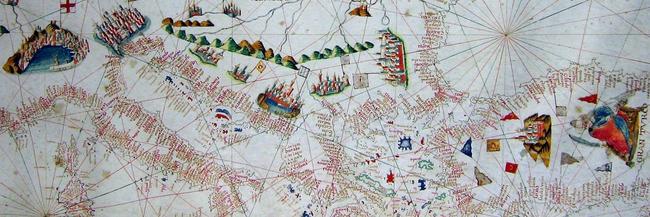

Yale University Library was among the first in the United States to collect Slavic materials systematically. Joel Sumner Smith, its Associate Librarian in the late 19th century, was one of the very few in his profession who read Russian. The books and serials he acquired today form the core of one of the major holdings in the west. These volumes have been digitized and are available to the public. Materials from Russia and Eastern Europe are found throughout the Yale University Library but are concentrated in Sterling Memorial Library. Print collections are supplemented by extensive digital holdings.
Types of Materials
Monographs, serials, manuscripts, government documents, posters, photographs. All materials are listed in the library catalog, Orbis.
Timespan Covered
Materials date from 15th century to the present.
Subject Strengths
- Emigre literature
- Literature
- History
- Politics
Languages
Abkhaz, Albanian, Armenian, Azerbaijani, Bashkir, Belarusian, Bosnian, Bulgarian, Buriat, Chechen, Church Slavonic, Chuvash, Croatian, Czech, Estonian, Georgian, Hungarian, Kazakh, Kyrgyz, Latvian, Lithuanian, Macedonian, Montenegrin, Polish, Romani, Romanian, Russian, Serbian, Slovak, Slovene, Tajik, Turkmen, Ukrainian, Uzbek
Countries
Albania, Armenia, Azerbaijan, Belarus, Bosnia and Herzegovina, Bulgaria, Croatia, Czech Republic, Estonia, Georgia, Hungary, Kazakhstan, Kosovo, Kyrgyzstan, Latvia, Lithuania, Macedonia, Moldova, Montenegro, Poland, Romania, Russia, Serbia, Slovakia, Slovenia, Tajikistan, Turkmenistan, Ukraine, Uzbekistan